- Midland Road Springs | Leaf Springs Specialists
- 01675 467387
- info@leafsprings.co.uk


What Is Axle Wrap and How Does It Damage Leaf Springs
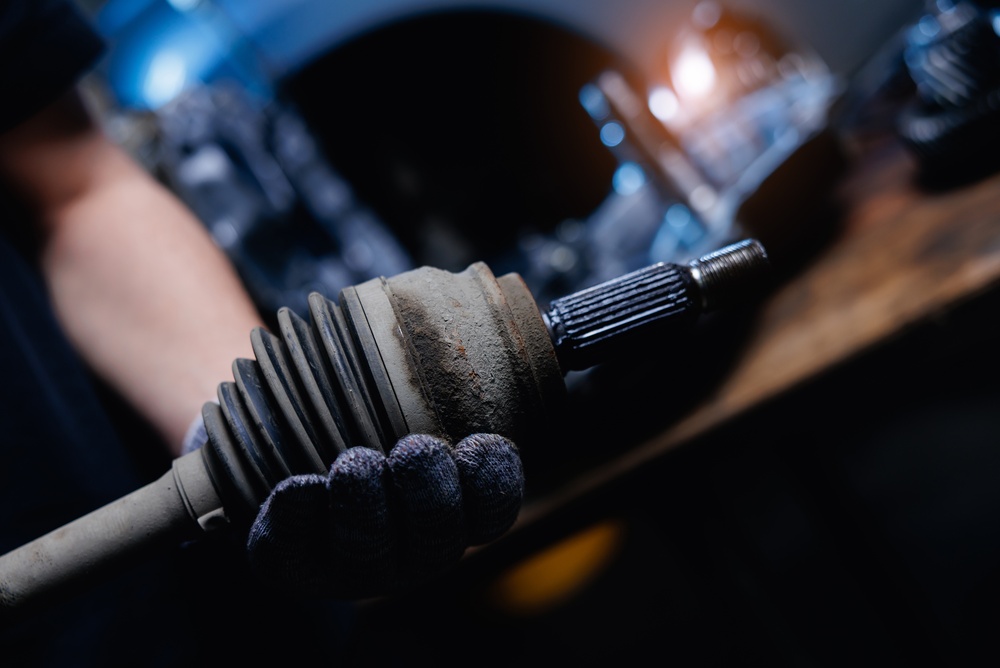
You accelerate, the rear of the vehicle shudders and the tyres appear to grip, slip and grip again. It might feel like a problem with the road surface or the tyres, but the movement could be coming from the rear suspension.
This is known as axle wrap. It is particularly common in powerful, heavily loaded or modified vehicles with a leaf-spring suspension system. If it is allowed to continue, the repeated movement can place considerable strain on the leaf springs, U-bolts and other drivetrain components.
So, how can it damage your vehicle? Let’s take a closer look.
What is an axle wrap in more detail?
Axle wrap happens when the torque produced during acceleration causes the axle housing to rotate against the direction of the wheels.
In a leaf-spring suspension system, the springs do more than support the vehicle’s weight and absorb bumps. They also help hold the axle in position. When too much torque is applied, the axle attempts to rotate and forces the leaf springs to twist into an S shape.
The springs should return to their normal position once the load is removed. However, when the axle repeatedly winds the springs up and releases them, the tyres may begin to bounce against the road. This is commonly known as wheel hop.
A small amount of axle movement can be part of the suspension’s normal operation. It becomes a problem when that movement is excessive, repeated or violent enough to affect the way the vehicle drives.
What causes axle wrap?
Axle wrap is usually caused when excessive rotational torque causes the leaf springs and their axle housing to twist and bend out of shape.
Common causes include:
- Worn, weakened or sagging leaf springs
- Broken or damaged spring leaves
- High engine torque or sudden acceleration
- Heavy towing or carrying excessive loads
- Incorrectly specified replacement springs
- Loose, stretched or damaged U-bolts
- Worn spring bushes or mounting components
- Modified suspension or increased ride height
- Lift or lowering blocks that increase leverage on the springs
- Leaf springs installed in the wrong orientation
- High-grip tyres combined with hard acceleration
The condition is particularly noticeable when a vehicle accelerates hard, climbs a steep gradient or pulls a heavy load. These situations place more torque through the axle and increase the force that the springs must control.
Modified vehicles can also be more vulnerable. An engine upgrade may increase power considerably without any corresponding changes being made to the suspension. The original leaf springs may then struggle to manage the additional torque.
What are the main signs of axle wrap?
Axle wrap is not always visible during a stationary inspection. The signs often appear when the drivetrain is placed under load.
Common indications of axle wrap include:
- Shuddering or vibration during acceleration
- A hopping or juddering sensation from the rear wheels
- Banging, clunking or knocking from beneath the vehicle
- A sudden loss and return of traction
- Excessive movement from the rear axle
- Uneven or unpredictable power delivery
- Vibration through the floor, seat or drivetrain
- Premature wear to U-joints or propshaft components
- Visible distortion, sagging or damage to the leaf springs
Wheel hop is one of the clearest warning signs. Instead of applying power smoothly to the road, the tyres repeatedly load and unload as the springs wind up and snap back.
However, these warning signs can also be caused by worn bushes, loose U-bolts, damaged shock absorbers or other suspension and drivetrain faults. A professional inspection is therefore important before replacing individual components.
How does axle wrap damage leaf springs?
Metal fatigue and cracking
Every axle-wrap cycle bends the spring pack under significant force. Repeated stress can accelerate metal fatigue, particularly in springs that are already old, corroded or overloaded.
Small cracks may eventually form and spread through an individual leaf. In more serious cases, the leaf can break completely.
Loss of spring shape
Continuous distortion can contribute to a loss of spring arch. The vehicle may begin to sit lower at the rear or lean towards one side, particularly when carrying a load.
Once a spring has sagged or become permanently deformed, it may no longer support the vehicle or control the axle correctly.
Movement within the spring pack
The individual leaves in a spring pack are designed to remain properly aligned. Repeated twisting can encourage unwanted movement between them, placing additional pressure on the centre bolt, clips and other retaining components.
If these parts loosen or become damaged, the spring pack may no longer operate as one stable unit.
Damage around the axle mounting point
Axle wrap places additional stress on the point where the axle and leaf spring meet. This may contribute to loose or stretched U-bolts, damaged spring seats and movement around the centre bolt.
Loose U-bolts are particularly concerning because they allow even more axle movement, potentially creating a cycle in which the original problem becomes progressively worse.
Can axle wrap damage other vehicle components?
Yes. Although the leaf springs absorb much of the force, axle wrap can affect several connected parts.
As the axle rotates, it changes the angle between the differential and the propshaft. Excessive or rapidly changing pinion angles may place additional stress on:
- Universal joints
- The propshaft
- The differential
- Gearbox or transmission mountings
- Spring bushes and shackles
- U-bolts and spring seats
- Shock absorbers
- Tyres
Repeated wheel hop can also cause shock loads throughout the drivetrain. Instead of transmitting torque smoothly, components are subjected to a rapid cycle of loading, unloading and impact.
This is why axle wrap should not be treated as nothing more than an annoying vibration. Leaving it unresolved could lead to a much larger and more expensive repair.
How can axle wrap be reduced or prevented?
The correct solution depends on the vehicle, its suspension design and how it is used.
Possible remedies include:
Replacing worn leaf springs
If the springs are sagging, cracked or no longer strong enough for the vehicle, replacement is often the only solution. New springs should match the vehicle’s specifications and intended use.
Choosing springs suited to the load
Vehicles used for towing or carrying heavy equipment may require springs designed for the additional load. Fitting unsuitable springs can affect ride quality and handling, so stronger is not automatically better.
Checking the U-bolts and mountings
The U-bolts, centre bolts, bushes, shackles and spring seats should all be inspected. Loose or worn parts can allow the axle to move even when the spring itself remains serviceable.
Reviewing suspension modifications
Lift blocks, lowering blocks and other suspension changes can increase the leverage applied to a leaf spring. If axle wrap starts after a vehicle has been modified, the complete suspension geometry should be checked.
Installing an appropriate axle-control system
Some high-torque, off-road or high-performance vehicles may benefit from a professionally designed traction bar or anti-wrap system. These components help control axle rotation without preventing the suspension from moving normally.
They must be correctly selected and installed. A poorly designed system may restrict suspension travel or transfer stress elsewhere in the chassis.
Get the right leaf springs for your vehicle
Axle wrap is a sign that the rear axle is moving more than the suspension can properly control. Sometimes the cause is a loose mounting component. In other cases, the leaf springs may be worn, incorrectly fitted or unsuitable for the vehicle’s power and workload.
Replacing one part without identifying the underlying cause may only provide a temporary fix.
Midland Road Springs supplies replacement and specialist leaf springs for a wide range of vehicles and applications. If you are experiencing axle wrap symptoms or are unsure which springs are suitable for your vehicle, contact our team for expert advice.